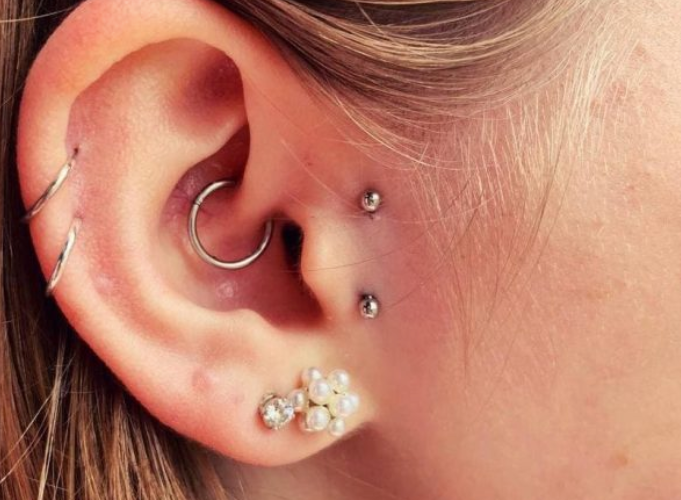
You got your piercing, followed the instructions, and now something looks a little off. Maybe there’s a bump. Maybe it’s redder than you expected, or there’s some fluid you weren’t anticipating. Your first instinct might be to panic, but before you do, take a breath. Knowing how to tell if your piercing is infected (versus just healing the way it’s supposed to) can save you a lot of unnecessary stress, and possibly a very avoidable mistake.
The truth is, the vast majority of post-piercing concerns are not infections. They’re normal healing responses that just don’t look pretty. This guide will walk you through exactly what to look for, what to leave alone, and when it’s time to get professional eyes on it.
What Does a Normal Healing Piercing Look Like?
Before you can spot a problem, you need to know what normal actually is, and normal is messier than most people expect.
The First 1–3 Days: Swelling, Redness, and Tenderness Are Expected
In the first few days after a piercing, your body treats the wound the same way it treats any puncture: with an inflammatory response. That means redness, mild swelling, and tenderness around the site are completely standard. Some piercings (especially cartilage and nostril) may remain visibly red or puffy for up to two weeks. This alone is not a sign of infection.
What Is Lymph Fluid? (The White or Clear Discharge Most People Mistake for Pus)
One of the most common causes of alarm is a white or slightly yellowish crust forming around the jewelry. This is lymph fluid, also called “piercing crust,” and it’s a sign your body is doing its job. It’s produced during the healing process and dries to a crust on the surface of the jewelry. It is not pus. It does not mean infection. A gentle rinse with sterile saline solution (as detailed in our Piercing After Care guide) is all it takes to manage it.
Normal Healing Timelines by Piercing Type
Healing times vary significantly depending on placement:
Earlobes: 6–8 weeks | Cartilage (helix, tragus, conch): 6–12 months | Nostril: 4–6 months | Septum: 6–8 weeks | Navel: 9–12 months | Dermal anchors: 1–3 months
Cartilage piercings in particular can look irritated for months even when healing correctly. Comparing a cartilage piercing at week three to a lobe piercing at week three is an apples-to-oranges mistake.


How to Tell If Your Piercing Is Infected – The Real Warning Signs
So what does an actual infection look like? A piercing infection occurs when bacteria colonize the wound site and the immune system can’t keep up on its own. Here’s what distinguishes it from normal healing.
Thick Yellow or Green Discharge
Lymph fluid is white, watery, or slightly translucent and dries into a crust. Infected discharge is thicker, opaque, and distinctly yellow or green, and it doesn’t dry the same way. If the fluid has a creamy, paste-like consistency and keeps coming back throughout the day, that’s a meaningful distinction.
Spreading Redness Beyond the Piercing Site
A healing piercing may be pink or red right around the hole. An infected one shows redness that spreads outward across the surrounding skin, often in a streaking or expanding pattern. If the redness is growing day by day rather than gradually fading, pay attention.
Increasing Pain After the First Week
Soreness should follow a clear downward trend as the days pass. If your piercing becomes more painful after the first week rather than less, that’s a warning sign. Pain that intensifies or throbs unprovoked (not just when touched) is worth taking seriously.
Warmth, Swelling, and Fever: When It’s Serious
Localized warmth is common in the first few days. But if the skin around your piercing feels hot to the touch well into the second week, and that heat is paired with worsening swelling and any systemic symptoms like fever, chills, or swollen lymph nodes, seek medical care promptly. These can indicate a spreading infection that needs antibiotic treatment.
Does an Infected Piercing Have an Odor?
Yes, sometimes. A mild smell from a healing piercing is normal (dead skin cells and sebum can accumulate around jewelry). An infected piercing may produce a noticeably unpleasant or foul odor, particularly alongside other symptoms. Odor alone isn’t a diagnosis, but combined with the signs above, it adds to the picture.
Irritation Bump vs. Keloid vs. Infection: What’s the Difference?
This is one of the most-searched questions in the piercing world, and understandably so, because they can look remarkably similar.
What Is a Piercing Irritation Bump?
An irritation bump is a small, raised bump that forms directly next to the piercing hole. It’s caused by physical trauma or friction, such as sleeping on the piercing, snagging the jewelry, or using jewelry that’s too short, not bacteria. It’s not an infection. Most irritation bumps resolve on their own once the irritating factor is removed.
What Is a Keloid and Who Gets Them?
A keloid is an overgrowth of scar tissue that extends beyond the original wound boundary. It’s firm, smooth, and typically darker than the surrounding skin. Keloids are more common in people with deeper skin tones and have a genetic component. They do not go away on their own and are not caused by infection, though they can be mistaken for one. If you have a history of keloid scarring, talk to your piercer before booking.
How to Tell Which One You Have
Ask yourself a few key questions. Is the bump getting bigger over time? Does it extend noticeably beyond the piercing hole? Is it firm and rubbery rather than soft? If yes to those, it’s more likely a keloid. Is it soft, did it appear suddenly after a snag or pressure, and does it sit right at the entry or exit point? That points to an irritation bump. Is it accompanied by discharge, spreading redness, and increasing pain? Then infection is more likely in play.
The Biggest Mistakes That Make Piercings Look Infected (When They’re Not)
Many cases that look like infections are actually caused by care errors. The good news is they’re fixable.
Over-Cleaning and Using the Wrong Products
Cleaning a piercing more than twice a day strips the skin of its natural defenses and causes chronic irritation. Harsh products like hydrogen peroxide, rubbing alcohol, Bactine, and antibacterial soap are too aggressive for a healing wound because they kill the healthy cells your body is using to repair the tissue. Stick to sterile saline spray and nothing more.
Jewelry That’s Too Tight, Too Thin, or the Wrong Material
Cheap jewelry made from mystery metals is one of the leading causes of persistent piercing problems. Nickel allergies are extremely common and produce redness, itching, and irritation that closely mimics infection. Implant-grade titanium, solid 14k gold, and implant-grade steel are the materials recommended by professional piercers. Our body piercing jewelry page covers what to look for when upgrading your jewelry.
Touching, Rotating, and Snagging the Jewelry
The old advice to “rotate your jewelry daily” is outdated and actively harmful. Every rotation introduces bacteria from your hands into a healing wound and disrupts the tissue trying to form around the jewelry. Leave it alone. The same applies to sleeping directly on a fresh ear piercing. A travel pillow with a hole in the center is a worthwhile investment.
When to Come In vs. When to See a Doctor
Come see us at Inkaholik if:
- You have an irritation bump that isn’t resolving
- Your jewelry feels too tight or was downsized too early
- You think your jewelry material may be causing a reaction
- You’re unsure whether what you’re seeing is normal
See a doctor or urgent care if:
- You have a fever alongside piercing symptoms
- Redness is spreading beyond the immediate piercing area
- You see red streaking on the skin, which is a sign of spreading infection
- The pain is severe and worsening
- You’ve already tried appropriate care and symptoms aren’t improving after two weeks
And one rule that applies to both scenarios: do not remove the jewelry yourself if you suspect an infection. Removing the jewelry can cause the surface to close over, trapping the infection inside. A professional should assess it first.
Key Takeaways
- Redness, swelling, and clear or whitish crust in the first few days are normal parts of healing, not signs of infection.
- True infection signs include thick yellow or green discharge, spreading redness, increasing pain after week one, and fever.
- Irritation bumps are caused by friction or trauma, not bacteria, and resolve when the irritating factor is removed.
- Keloids are scar tissue overgrowth, not infections. They are firm, grow beyond the piercing site, and need professional evaluation.
- Never use hydrogen peroxide, alcohol, or Bactine on a healing piercing.
- Do not remove jewelry if you suspect an infection. Get professional advice first.
- Jewelry material matters: implant-grade titanium and solid gold minimize allergic reactions.
You’re Probably Going to Be Fine
The most important thing to know about how to tell if your piercing is infected is this: true infections from professional piercers using proper sterilization are far less common than the internet would have you believe. Most of what people experience is normal healing, manageable irritation, or a care routine that needs a small adjustment.
When in doubt, come in. At Inkaholik, we’ve seen every stage of the healing process across thousands of piercings at our Miami studios and we’re happy to take a look, answer your questions, and help you get back on track. Book an appointment or stop by for a walk-in consultation at any of our locations. Getting pierced should be something you enjoy, not something you spend weeks worrying about.
Follow us on Instagram!